
CHINA'S TWO SESSIONS SPECIAL | Inside Wang Yi's Press Conference: China's Diplomatic Priorities
A flavor of the presser's tone can be taken from Wang's most used keywords: aside from China (97 mentions) and world (42), development (44), cooperation (33), people (23), peace (22) & stability (18).

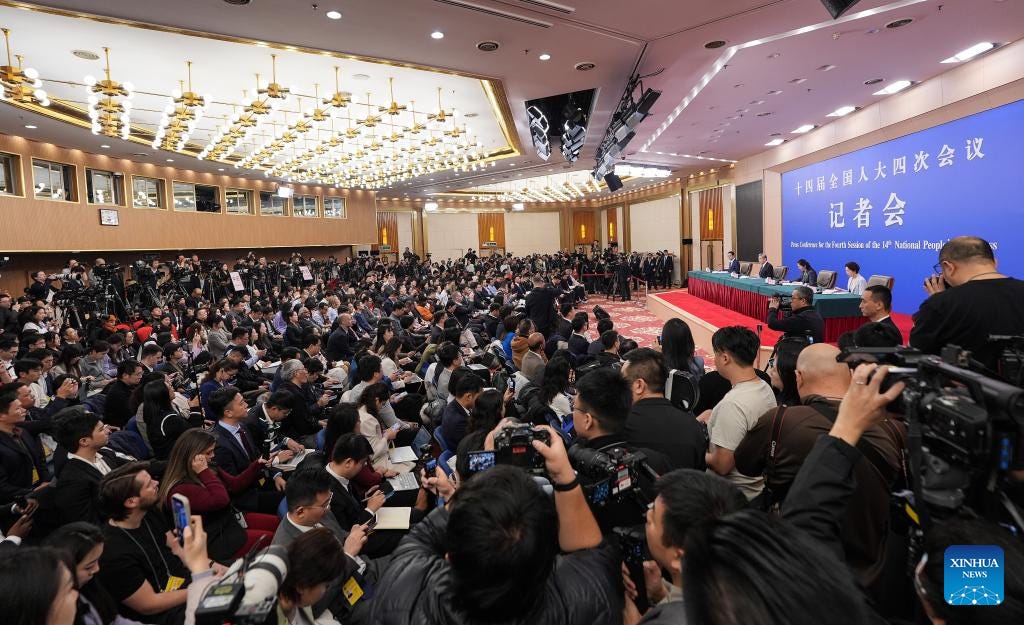
Editor's Note: In the third and final episode of the China's Two Sessions special series, let's take a look at the key takeaways of China's foreign policy as Foreign Minister Wang Yi outlined the country's diplomatic priorities at an roughly 90 minutes press conference in Beijing. Shen Shiwei shares his on-site observations and highlight from the press conference.
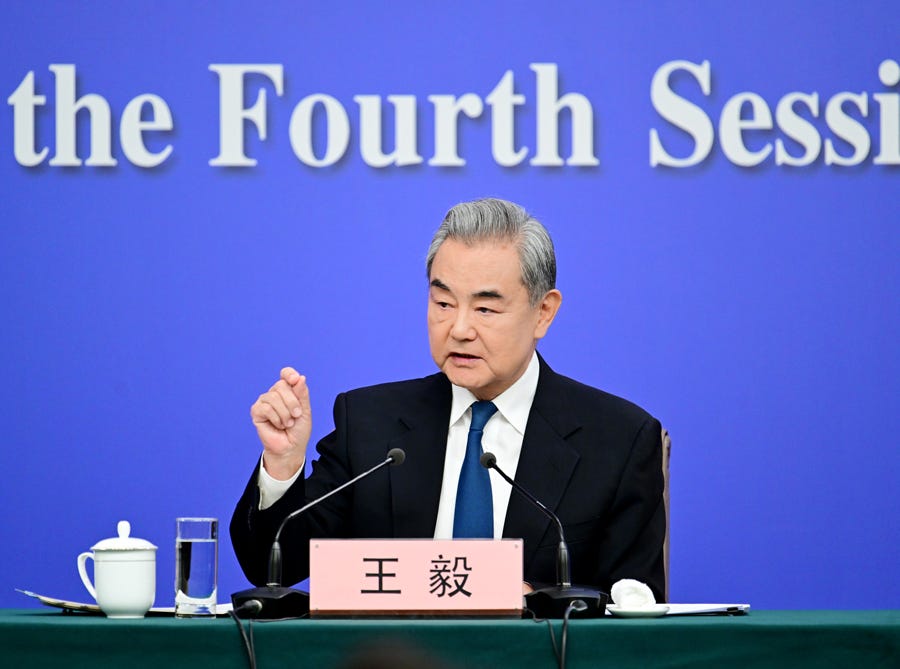
Chinese Foreign Minister Wang Yi on March 8 outlined China's diplomatic agenda, priorities and positions on key bilateral, regional and global issues, by addressing 21 questions ranging from China's vision of global governance to its relations with the U.S., Russia, Europe, Japan and the Global South including India, Africa and Latin America, the rising Middle East crisis including the marginalized Palestine question, the Taiwan question, the UN's role as multilateralism is endangered, the South China Sea and etc. What are the key highlights?
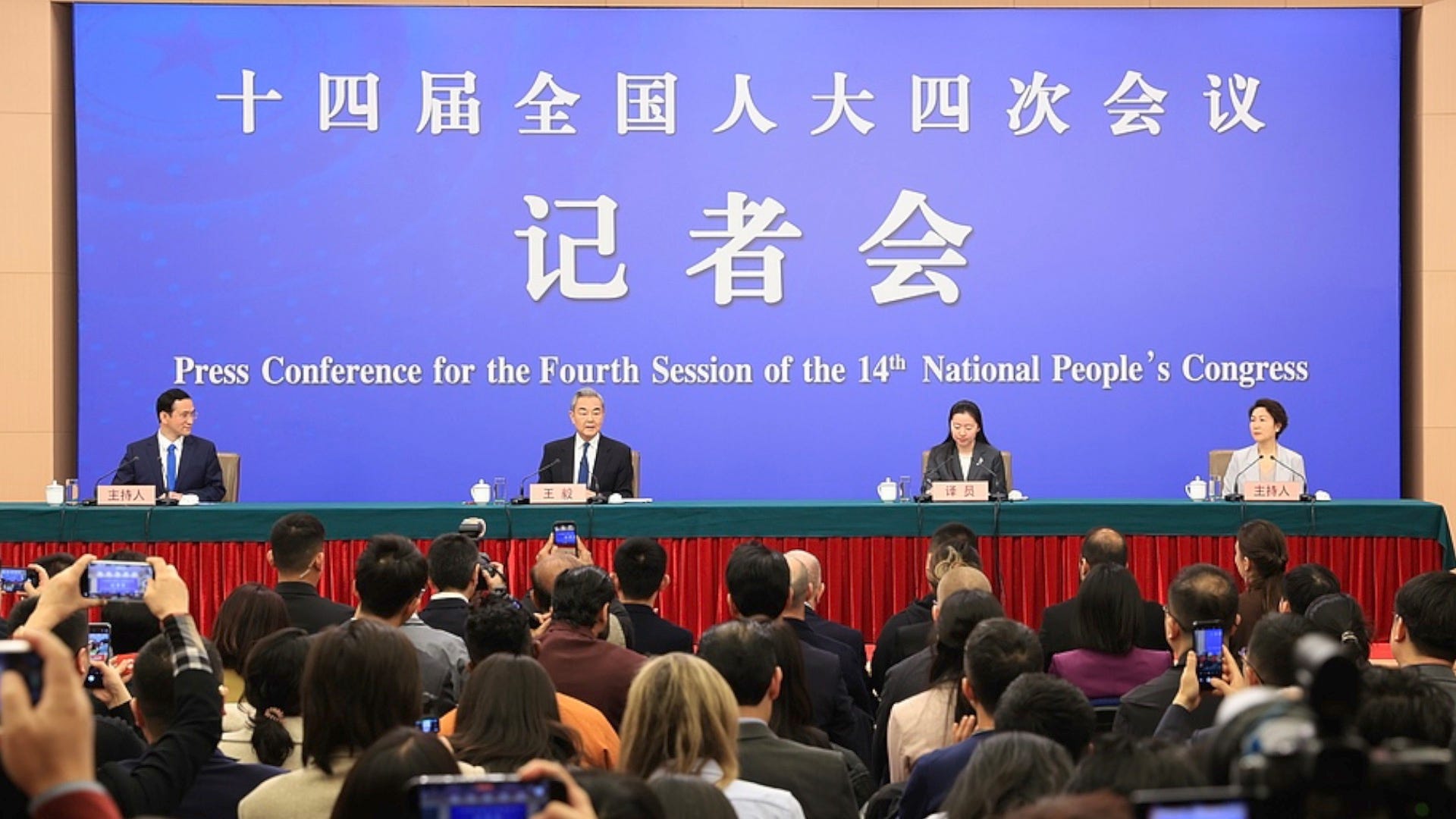
Head-of-state diplomacy anchors China's diplomacy
Chinese Foreign Minister Wang Yi hails heads-of-state diplomacy as anchor of Chinese diplomacy, announcing that President Xi Jinping will receive guests from around the world in 2026, host major diplomatic events such as the APEC Economic Leaders' Meeting and the second China-Arab States Summit, and make several important visits abroad.
China-Russia ties resilient despite external pressure
China-Russia relations remain as steady as a rock against all odds (中俄关系始终“风雨不动安如山”), said Foreign Minister Wang Yi, as this year marks the 30th anniversary of the China-Russia strategic partnership of coordination (中俄战略协作伙伴关系建立30周年) and the 25th anniversary of the China-Russia Treaty of Good-Neighborliness and Friendly Cooperation(《中俄睦邻友好合作条约》签署25周年).
Wang added that 80 years ago, China and Russia jointly contributed to the establishment of the postwar international order, and that eight decades later, the two countries will continue to work together to inject momentum into the development of a multipolar world.
APEC Shenzhen will focus on openness, innovation and cooperation
China will work toward the goal of translating the vision and blueprint for building an Asia-Pacific community into actions and reality, as the 2026 APEC meeting to be held in China's Shenzhen will focus on the three priorities of openness, innovation and cooperation.
China will host over 300 events in cities across the country in the whole year, with the participation of multiple Chinese provinces and municipalities.
U.S.-Israel war on Iran ‘should not have happened’
Foreign Minister Wang Yisaid the ongoing war should not have happened and does no one any good, adding that the history of the Middle East shows that war helps no one. Force provides no solution and armed conflict will only increase hatred and breed new crises, he added.
He called for measures to be taken to avoid the spiraling and widening of the conflict, for state sovereignty to be respected – noting that might does not make right and willful use of force does not prove strength (拳头硬不等于道理硬,世界不能退回丛林法则) and the law of the jungle must not return and rule the world (世界不能退回丛林法则)– for regional countries to make decisions about their futures and for a political settlement to hotspot issues.
A ‘big year’ for China-U.S. relations, but no G2
China has signaled that the U.S. President Donald Trump's China visit is in the process, as I have argued and predicted. Wang Yi said this year is a "big year" for China-U.S. relations and the agenda of high-level exchanges is already on the table (高层交往的议程已经摆在我们的桌面上). Wang asks both sides to "make thorough preparations, foster a conducive atmosphere, manage existing differences, and remove unnecessary distractions" (双方为此做出周全的准备,营造适宜的环境,管控存在的风险,排除不必要的干扰。)
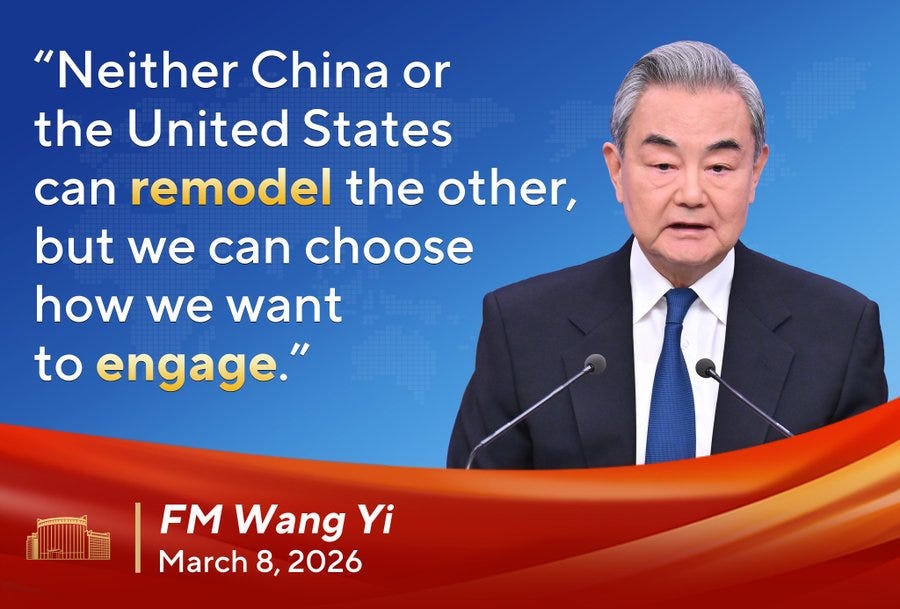
Would China accept a "G2" format (“中美共治”) as a framework for China and the U.S. to address global challenges? Wang didn't say yes or not, but stressed that multipolarity is what the international landscape should look like (多极共存才是国际格局应有的样子) and China is committed to the formation of an equal and orderly multipolar world.
Wang added that China will never follow the old path that "a strong country is bound to seek hegemony," nor does it subscribe to the logic of "major-power co-governance" (中国绝不走国强必霸的老路,也不认同“大国共治”的逻辑。), since every episode of great-power rivalry and bloc confrontation has brought disasters and suffering to humanity. (回看历史,每一次大国争霸、阵营对抗,都给人类带来了灾难和痛苦。)
Revitalize the UN, defend the UN and make the U.N. stronger
Wang warned against bypassing the United Nations (UN) through alternative mechanisms - remarks that appeared to be a veiled swipe at recent United States initiatives, including its Board of Peace.
The core message of the China-proposed Global Governance Initiative (GGI) is that the leading status of the UN must be upheld and its central role strengthened, Wang said, adding that while the organization is not perfect, without it the world would only be worse, and creating parallel structures outside the UN or worse still, putting together various exclusive blocs and circles is unpopular and unsustainable (尽管联合国并不完美,但没有联合国,这个世界只会更加糟糕。脱离联合国另起炉灶、单搞一套,甚至拼凑各种小集团、小圈子,都不得人心,也不可持续).
"It's crucial for Europe to have a correct perception of China"
China is not a "competitor" but an "global partner," and interdependence is not a risk, intertwined interests are not threats, and openness and cooperation will not harm economic security, noted Wang Yi, adding that China welcomes the Europe to "leave protectionist attic, join the China market gym (走出保护主义的“小阁楼”,来到中国市场的“健身房”) to build their strength and competitiveness."
"Building fences and barriers will only lead to self-isolation," he cautioned.
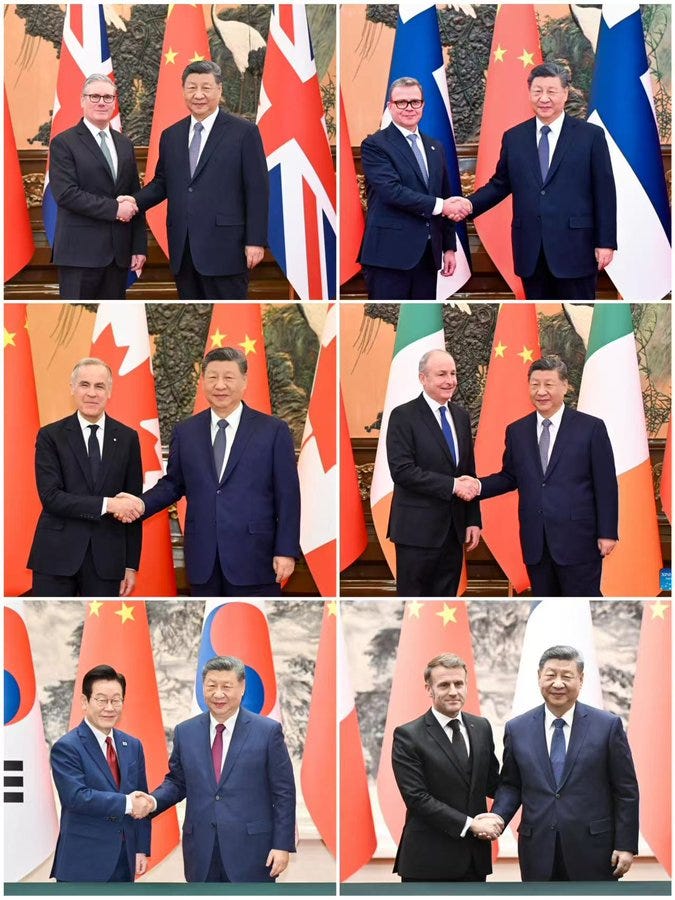
Over 2 million European tourists have visited China via the visa-free policy, while many Western leaders, especially the European leaders from France, Spain, Finland, Ireland, the UK and Germany have made visits to China.
"Future of China-Japan relations hinges on Japan’s choice"
When asked to comment on Japanese PM Sanae Takaichi's erroneous remarks on Taiwan region last November, Chinese Foreign Minister Wang Yi said that the future of China-Japan relations hinges on Tokyo's choice.
Last year marked the 80th anniversary of the victory in the Chinese People's War of Resistance Against Japanese Aggression. Wang noted that in such a milestone year, Japan should have reflected on its past, including the atrocities of its aggression and colonization of Taiwan. However, a sitting leader in Japan actually claimed that "emergency in Taiwan" would constitute a "survival crisis" for Japan, and could trigger the so-called right to collective self-defense, Wang said.
"Let me ask: Taiwan affairs are purely China's internal affairs, what right does Japan have to interfere? What right does Japan have to exercise the right to self-defense in case something happens in China's Taiwan region? Does the so-called right to collective self-defense mean that Japan intends to hollow out its pacifist constitution which renounces the right to belligerency? Recalling that the Japanese militarists used the excuse of a 'survival crisis' to launch wars of aggression, people in China and in other Asian countries cannot but ask with great vigilance and concern: Where exactly is Japan heading?"
-- Wang Yi, Chinese Foreign Minister responded on March 8, 2026
This year marks another 80th anniversary – the 80th anniversary of the opening of the International Military Tribunal for the Far East. Eighty years ago, the judges from 11 countries concluded more than two and a half years of trial with extensive irrefutable evidence that laid bare the heinous crimes of the Japanese militarists.
The Tokyo Trials were a judgment on human conscience and a verdict for history's justice, Wang said, adding that it is his hope that the people in Japan can see clearly and not allow anyone to overreach itself and repeat the past mistakes today. A growing China and the 1.4 billion Chinese people will never allow anyone to speak up for colonization, or overturn the verdict on aggression, he added.
Global South 'key driver of multipolarity'
Wang said that he Global South has become a key driving force to promote a multipolar world and the collective rise of the Global South is a distinct hallmark of the great transformation unfolding in the world, adding that China's heart is with the Global South and China's root is in the Global South (中国始终心系全球南方、扎根全球南方).
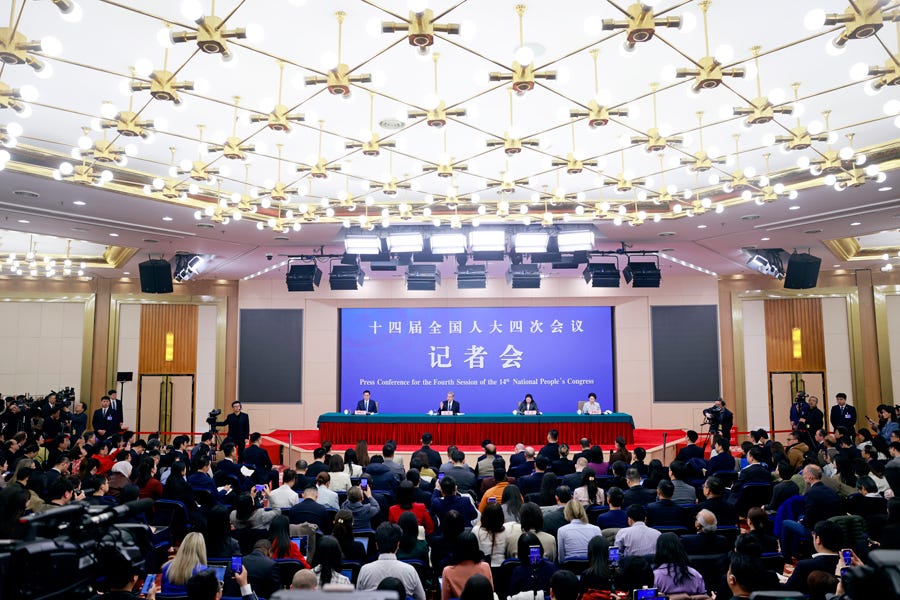
On China-India ties, Wang responded to Press Trust of India that China-India mutual trust and cooperation is beneficial to the development of the two countries, while division and confrontation is detrimental to the rejuvenation of Asia.
As the year of 2026 is designated as the China-Africa Year of People-to-People Exchanges, and also marks the 70th anniversary of the beginning of diplomatic relations between China and African countries, China will host multiple African leaders, also China will fully implement zero tariffs on 100% of tariff lines for African countries starting on May 1. In this year, nearly 600 exciting events to take place under the China-Africa Year of People-to-People Exchanges.
In responding to the U.S. policy of interfere into China-Latin America relations by pressuring Latin American countries, Wang said that the path of Latin America and the Caribbean countries should be chosen by their people, and China-LAC cooperation does not target any third party and should not be subject to interference by any third party (中拉合作不针对第三方,也不应受第三方干扰), adding that old scripts from the 19th century shouldn’t be acted out on the international stage of the 21st (21世纪的国际舞台,不应再上演19世纪的旧戏码).
Two-state solution only equitable solution to Palestinian question
When asked about China's view on the Gaza crisis and the U.S. creation of a Board of Peace to deal with the Gaza issue and postwar arrangements, Wang Yi reiterated that the Two-state solution is the only equitable solution to Palestinian question, adding that any other arrangements or new mechanisms must reinforce—rather than undermine—the two-State solution.
China, ASEAN to finish South China Sea COC consultation
China and the Association of Southeast Asian Nations (ASEAN) are looking forward to completing the consultation on a Code of Conduct (COC) in the South China Sea this year, as the consultation has reached crunch time, said Chinese Foreign Minister Wang Yi.
Chinese Foreign Minister Wang Yi: The South China Sea is home to the world’s busiest, safest and freest shipping lanes. Making waves wins no hearts and fomenting trouble finds no takers.Noting that the Philippines has assumed this year's ASEAN chair, Wang said that China hopes that the Philippines will resist the pull of self-interest and fulfill its responsibility.
"Taiwan never was, is not and never will be a country"
Wang Yi stressed that the Taiwan question is China's internal affair and it's at the core of China's core interests, a red line that must not be crossed or trampled on. Wang further noted that the DPP authorities' obstinate pursuit of their separatist agenda is the root cause undermining peace and stability across the Taiwan Strait (民进党当局顽固坚持“台独”分裂立场,是破坏台海和平稳定的祸根乱源).
Wang Yi said, Taiwan has been an integral part of China since ancient times. It never was, is not, and never will be a country. Its return to China is a victorious outcome of the Chinese People's War of Resistance Against Japanese Aggression and the Second World War. Its status has been definitively fixed by a series of international legal instruments, including the Cairo Declaration, the Potsdam Proclamation, Japan's Instrument of Surrender, and Resolution 2758 of the U.N. General Assembly. Any attempt to create "two Chinas" or "one China, one Taiwan" is doomed to fail.
'Beacon illuminating humanity's path'
Wang described the concept as a "beacon illuminating humanity's path forward" that could contribute to the building of an open, inclusive, clean, peaceful and prosperous world, and said that its truth and value are increasingly catching international attention.
The foreign minister repeatedly highlighted China's peaceful development, and reiterated that the country will never take the "beaten path" of seeking hegemony as it grows stronger.
He also spoke about the governance deficit and multilateral threats, and stressed the importance and timeliness of the China-proposed Global Governance Initiative (GGI), which he said had received support and responses from over 150 countries and international organizations.
Read more:
Full text: Member of the Political Bureau of the CPC Central Committee and Foreign Minister Wang Yi Meets the Press -Chinese Foreign Ministry-
Stay tuned for more updates on China's political, economic, and cultural landscapes.
Disclaimer: This newsletter is for informational purposes only. All sources are publicly available and subject to change.
Shen Shiwei's Social Media Links
X: @shen_shiwei Facebook: Shen Shiwei YouTube: @shen_shiwei_focus